

Note – This post is from our newsletter archives. It was the President’s message by Pat McCart from the November, 2010 issue of Chips & Shavings.
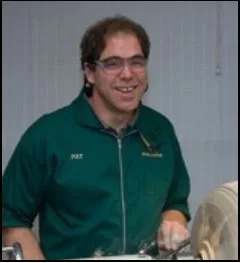 I reached another personal milestone on my bowl turning journey the other day when I signed my 200th bowl. I quickly pondered what I have learned about turning since the numbers on the bottoms of my bowls entered triple digits. I narrowed it down to 5 items that I think will help most new turners avoid some pit falls and have more fun.
- Learn how to sharpen your tools and do it often. If you think your tool “might be” dull it is!
- One high quality tool is better than a set of “ok” tools. My Grandpa use to tell me “a top quality tool is always worth the price and a cheap one never was”.
- Cutting the wood is better than sanding it into submission. Learn how each tool cuts and proper tool positioning to minimize your sanding time.
- Green wood is a hoot to turn! Get some green wood and turn it into shavings on the floor. It helps you learn tool control and sharpening. It is sure to be an eye opening and grin inducing time at your lathe.
- Woodturners are really good people. I have made hundreds of friends from all walks of life and have found them to be some of the most generous people around. Most turners will go out of their way to help you improve your turning skills.
Be safe, have fun and make shavings.
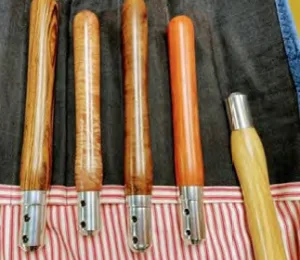 Jimmie will show us three different ways to turn your own handle so that no matter what stage you are at in your woodturning journey or what tools you prefer to use you will gain knowledge for creating your own tool handles. The demonstration also includes the installation of the new tool insert Jimmie developed that facilitates the removal of tools for ease of sharpening or simply swapping out to a different tool with your new handle.
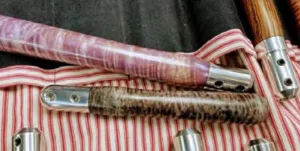 Jimmie’s nature has always been to do something to the best of his ability. If that means taking the extra time to sand a surface to 1200 or more, then buffing the final surface to a high sheen the result is worth the effort. Whomever enjoys the piece will know it was hand made by a supreme craftsman for their everlasting enjoyment.
 It’s that time of year for our annual Holiday party and member appreciation meeting. Here are the details from our President:






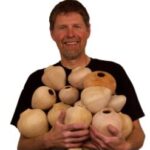 How fortunate we are this month! Our October guest demonstrator is one of the most creative and prolific woodturning artists of our time. Trent Bosch is primarily a wood sculptural artist with a body of work stretching back into the late 1990’s. Many of us know him for his bowl hollowing prowess. His line of hollowing tools are considered a gold standard for their ease of use and innovative focus on reducing workload and strain on the turner.
 Are you not a member of the SPSW and wondered what kind of programming we have? Well we have a sample for you. Our own Pat McCart, multi-time former SPSW chapter President demonstrated how he turns his world famous three footed bowls. You can view it on our YouTube channel here: